What Should You Do After an Appliance Leak in Morristown?
You walk into the kitchen and your sock is wet. What should you do after an appliance leak in Morristown? Stop the water first, stay out of water near power, take photos, and call for help the same day. This guide walks you through each step, appliance by appliance, so a small leak does not turn into a mold and subfloor job.
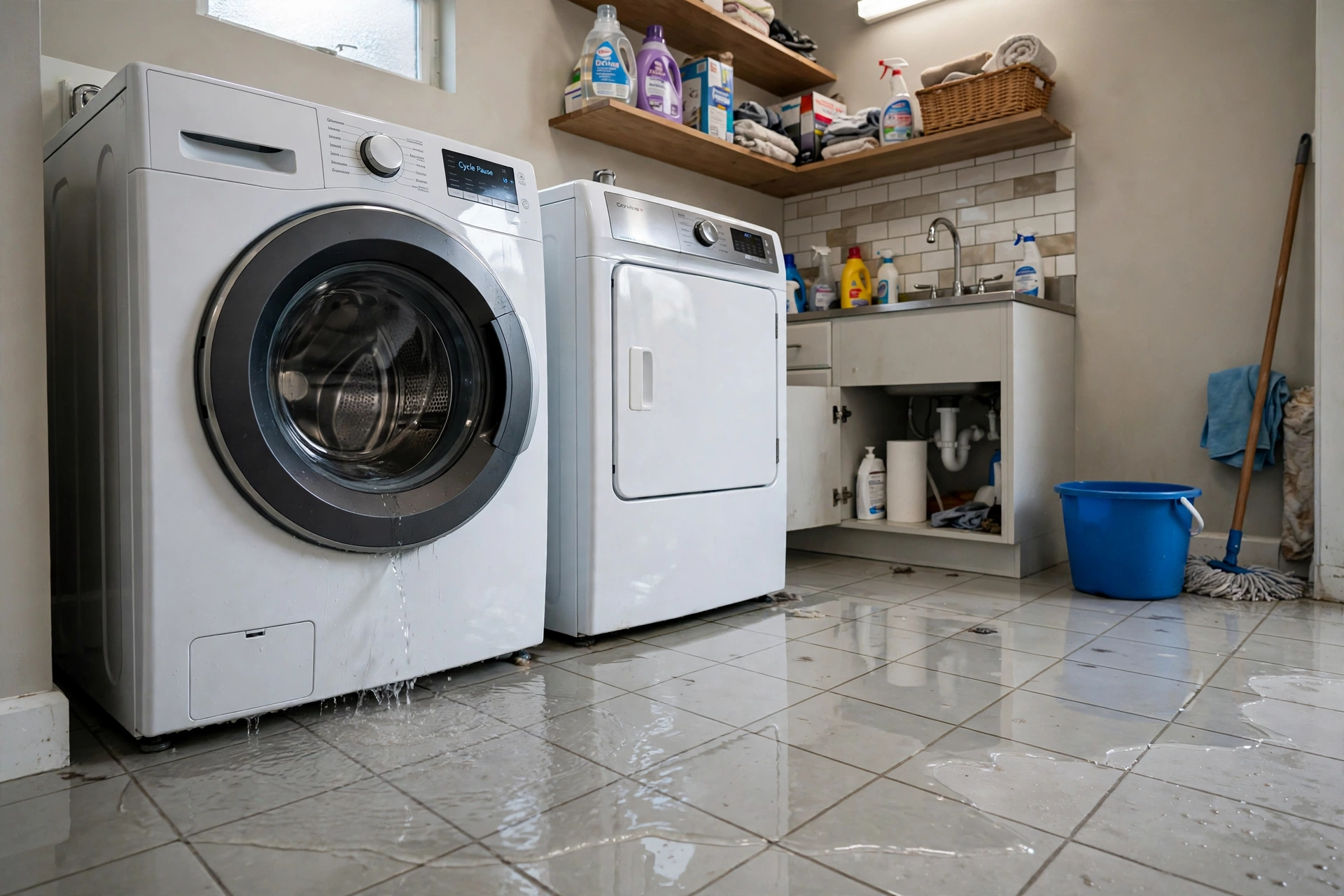
A leaking appliance rarely announces itself with a flood. Most Morristown appliance leaks start as a slow drip behind a fridge, under a dishwasher, or at a washing machine hose. The puddle you can see is usually the smallest part of the problem. Water wicks into cabinet bases, under flooring, and into the subfloor while you are out. That is why the first hour matters most.
The first 10 minutes after an appliance leak
Stay safe first. Do not walk into standing water near outlets, a breaker panel, or a plugged in appliance. If the breaker panel is upstairs and dry, you can turn off the circuit for the wet area. If the panel is wet or in the basement with standing water, leave it alone and call for help.
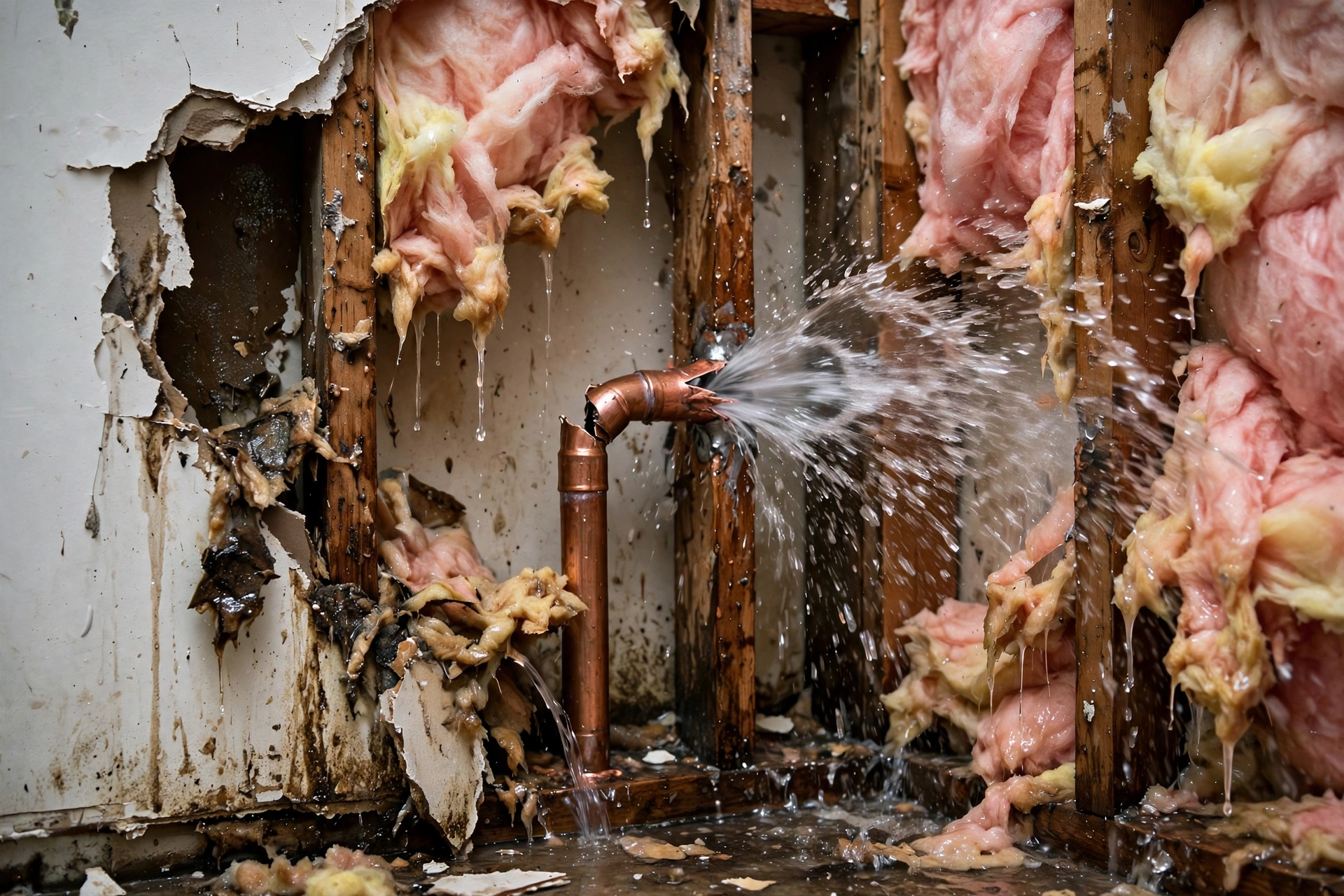
Stop the water if you can do it safely. Every appliance that uses water has a shutoff close by. The washing machine has valves behind it. The dishwasher has a supply line under the kitchen sink. The fridge ice maker has a small line, often with a valve behind the fridge or under the sink. The water heater has a cold water inlet at the top. Close the valve that feeds the leak. If you cannot find it, or the water keeps coming, shut off the main water valve for the house.
Then take photos and short videos before you move much. Photograph the appliance, the wet floor, the wall base, and any damaged items. Keep the failed hose or fitting if you can remove it safely. Move rugs, boxes, and small items to dry ground. Call (973) 240-9515 any time for appliance leak cleanup in Morristown. The team answers emergency calls 24/7 and aims to reach emergency calls in Morristown within 30 minutes.
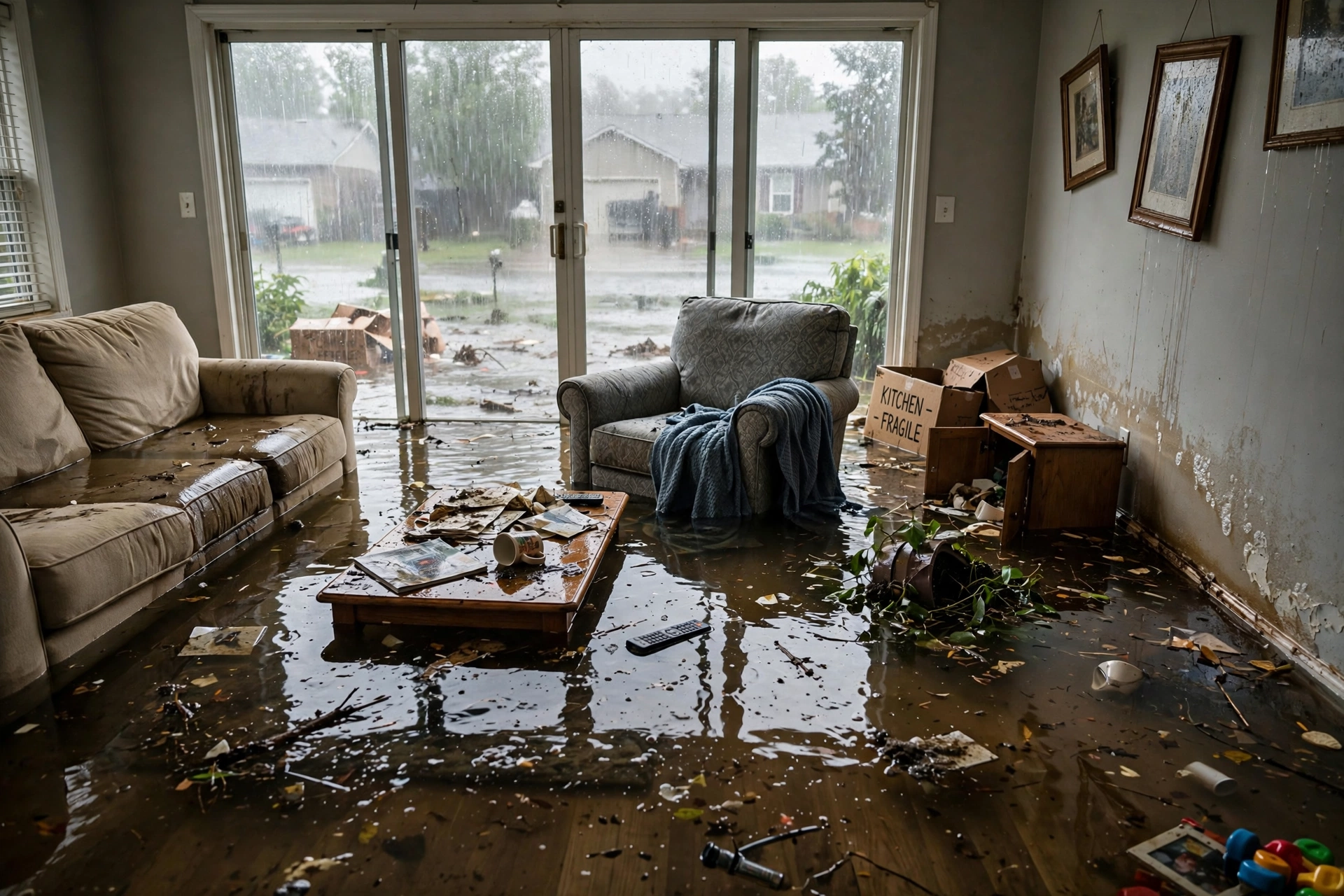
Do not use a regular household vacuum on water, and do not run fans over visible mold. A box fan can help a small spill on a hard floor, but it cannot dry water trapped under cabinets or inside a wall.
Which appliance leaked, and what it means
Not all appliance leaks behave the same way. The source changes how fast the water spreads, how dirty the water is, and what needs to be dried.
How do I know if my washing machine is leaking?
A washing machine can leak from a burst supply hose, a loose fill connection, a worn door seal, or a drain that backs up. A burst hose is the worst case, because a pressurized line can release a large volume of water in minutes. Check the hoses first, then the door seal and drain hose. If the machine is upstairs, check the ceiling below too. Replace rubber hoses every five years with braided stainless steel lines.
What should I do if my dishwasher is leaking?
A dishwasher usually leaks at the door seal, the supply line, or the drain connection. The leak often hides under the machine and soaks the cabinet base and subfloor before anyone sees water on the floor. Check under the sink for a wet supply line, and do not run the dishwasher again until the leak is found. A dishwasher leak is usually gray water, which carries soap, food particles, and light bacteria, so it needs more careful cleaning than a clean supply line leak.
How do I find a refrigerator water line leak?
A fridge ice maker line is a thin tube under constant pressure, and it can seep behind the fridge for weeks or months before anyone notices. The first signs are often a warped floor, a musty smell, or a soft spot near the fridge. Pull the fridge out carefully and look for a wet wall base. Shut off the small valve that feeds the line. If the floor feels soft, the water has spread further than the puddle suggests.
What if my water heater is leaking?
A water heater can leak from the tank, the drain valve, or the pipes at the top. A tank failure can release a large volume of water quickly, often in a basement or utility room. Shut off the cold water inlet at the top, and turn off power or gas if you can do it safely from a dry spot. Drying should start the same day, because a basement leak can soak stored items and the bottom of drywall.
The hidden damage: where the water really goes
This is the part most homeowners miss. Water does not stay where it fell. It spreads sideways under flooring, wicks up into drywall, and seeps into the cabinet toe kick at the bottom of kitchen cabinets. It can travel under a kitchen floor and appear in the next room, or drip through to the ceiling below. The surface can feel dry while the subfloor is still wet.
That is why professional cleanup starts with moisture mapping, not just mopping. A technician uses moisture meters and infrared cameras to find the water you cannot see, then pulls the appliance away from the wall and extracts standing water. Readings are logged until meters confirm a dry standard. For the full service, see appliance leak cleanup in Morristown, which covers extraction, drying, and cleanup for kitchens, laundry rooms, and basements.
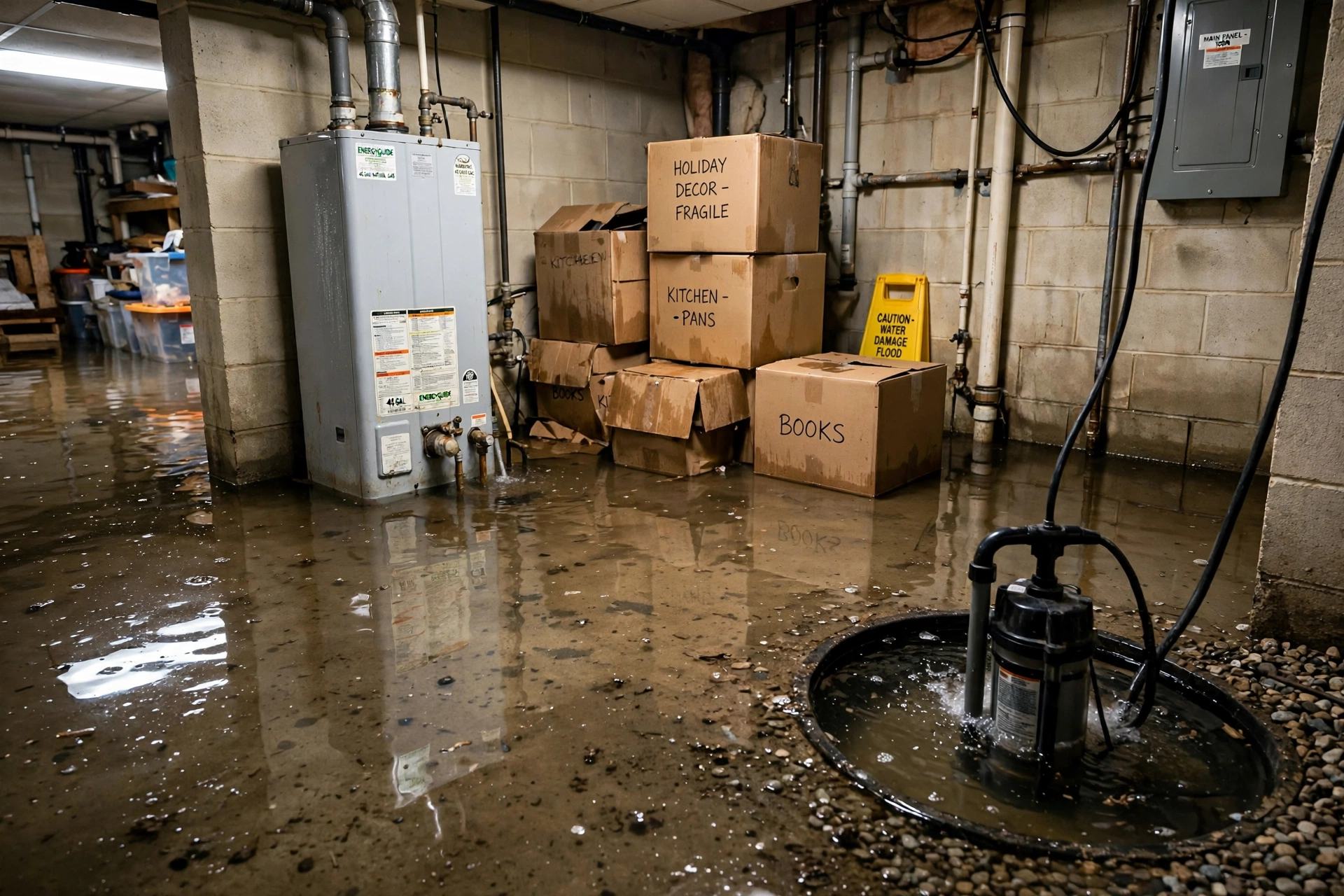
Morristown homes add their own twist. Many homes in the Historic District and older neighborhoods were built long before modern supply lines, with aging plumbing, corroded galvanized lines, and stone or block foundations. A slow fridge line leak can soak a wood subfloor for months. Basements sit below ground level, so a water heater leak can pool against the slab before anyone walks downstairs. Winter makes it worse, because cold snaps stress old pipes and fittings.
What professional appliance leak cleanup involves, step by step
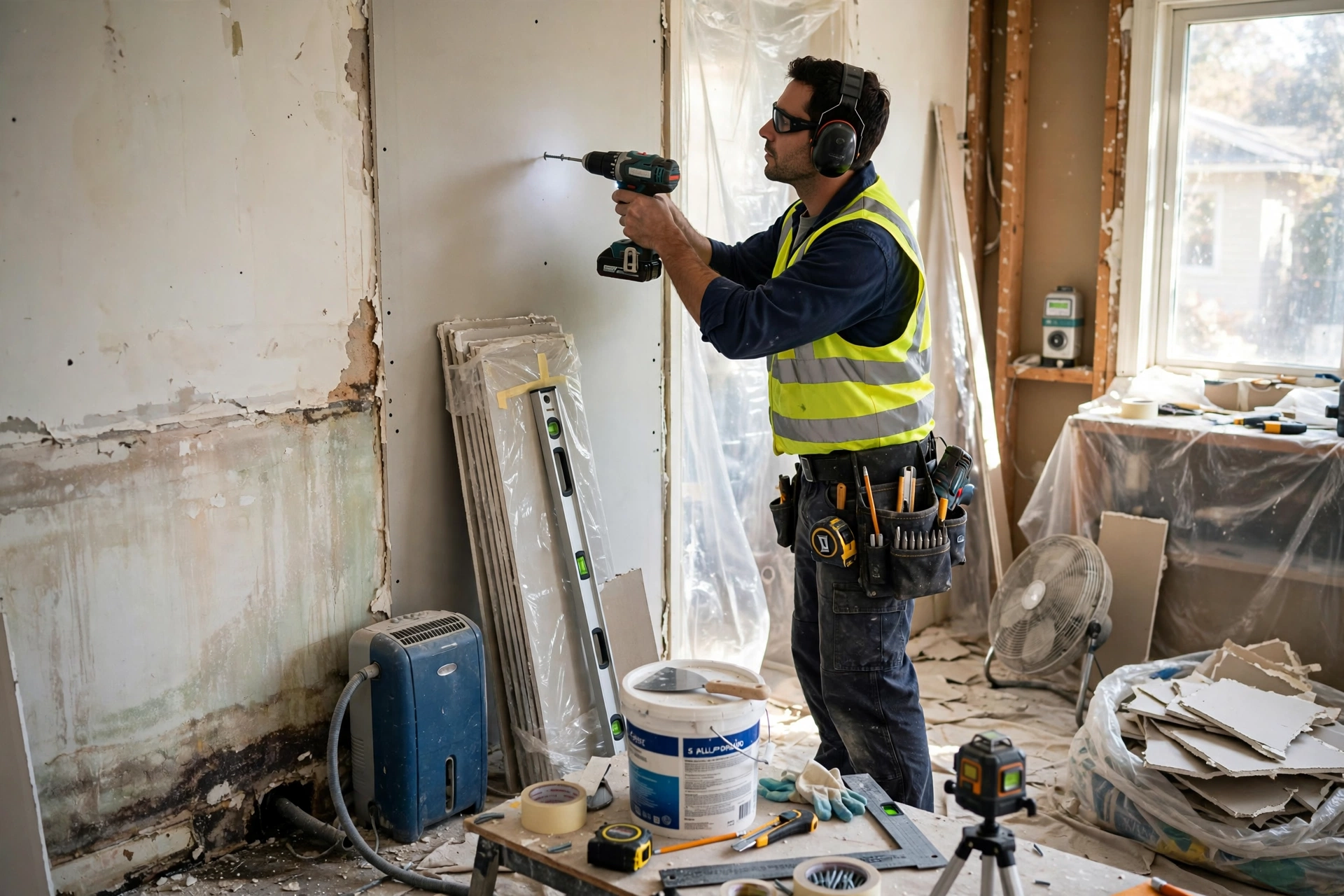
Good cleanup follows a clear order. First, the crew checks for hazards, such as electrical risks and dirty water. Then they trace the source and stop the supply. Next, they pull the appliance away from the wet floor, extract standing water, and remove wet materials that cannot be saved, such as carpet pad and soaked insulation.
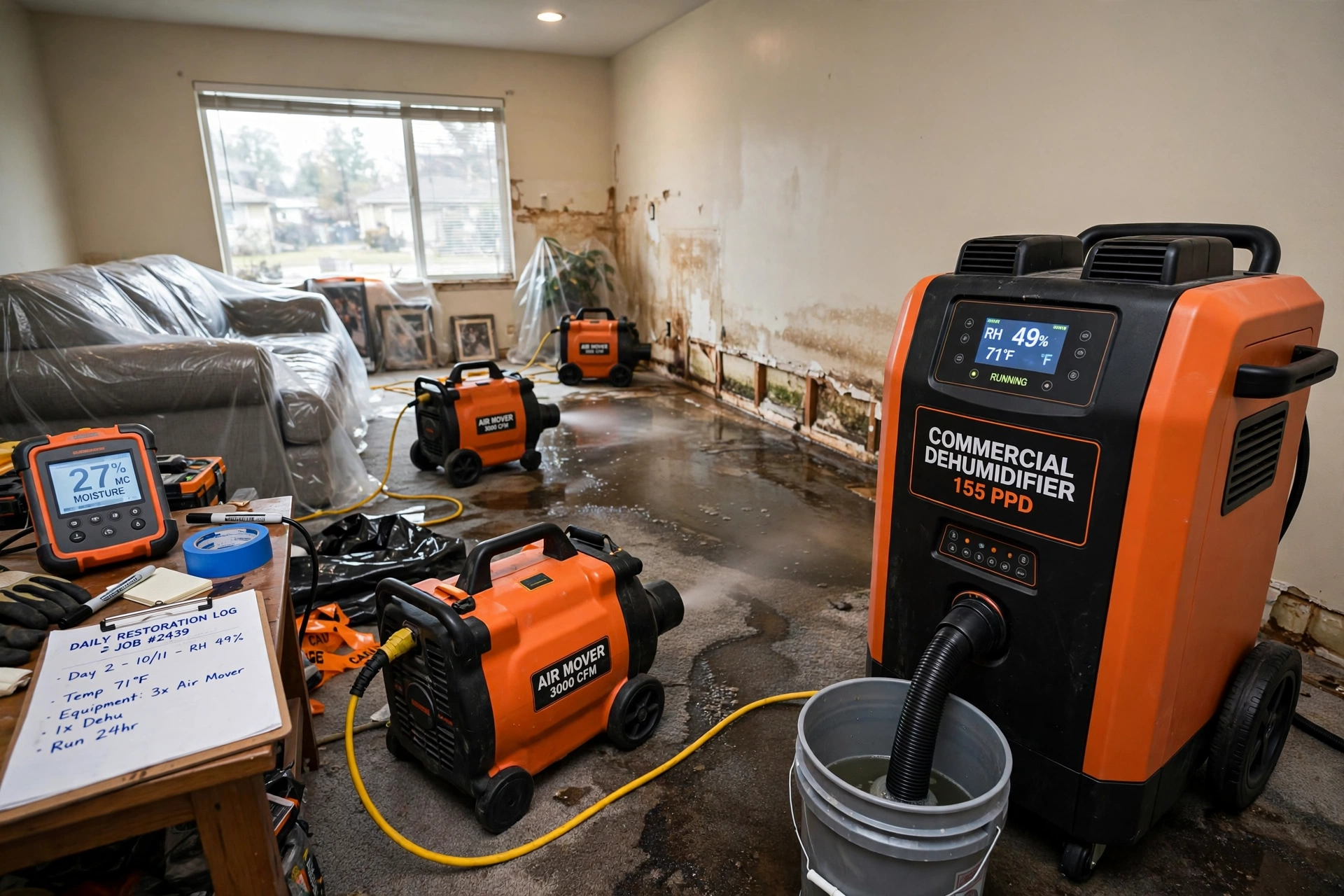
Then drying begins. Air movers push dry air across wet surfaces, and dehumidifiers pull moisture out of the air. Drying takes days, not hours, because concrete, block, and framing hold water and release it slowly. A typical appliance leak drying job takes 2 to 4 days. See structural drying in Morristown for how drying is monitored. Do not replace flooring or drywall before moisture readings are back to normal.
How much does appliance leak cleanup cost in Morristown?
There is no single price, because volume, water type, and materials change every job. These are typical ranges from research only, not this business price. National guides put the average water damage restoration job near $3,800, with most jobs falling between about $450 and $16,000. Mitigation alone, which means extraction and drying, typically runs about $3 to $7.50 per square foot. A small leak caught the same day may cost under $500 to $1,500, while a fridge or dishwasher leak that reached the subfloor typically runs about $1,500 to $6,000.
Finished kitchens cost more than unfinished utility rooms, because cabinets, flooring, and drywall have to be removed and dried or replaced. Gray water costs more than clean water, because it needs disinfection as well as drying. Ask for an on-site assessment before you agree to work, and keep every receipt and photo for your insurer.
Mold risk: why 24 to 48 hours is the deadline
Mold can begin growing on wet materials within 24 to 48 hours, according to EPA guidance. That window is the main reason speed matters after an appliance leak. By the time you can smell a musty odor or see dark spots on drywall, mold has already been growing for days. Fast drying is the best protection, and also the cheapest, because a job caught in the first day is usually a drying job.
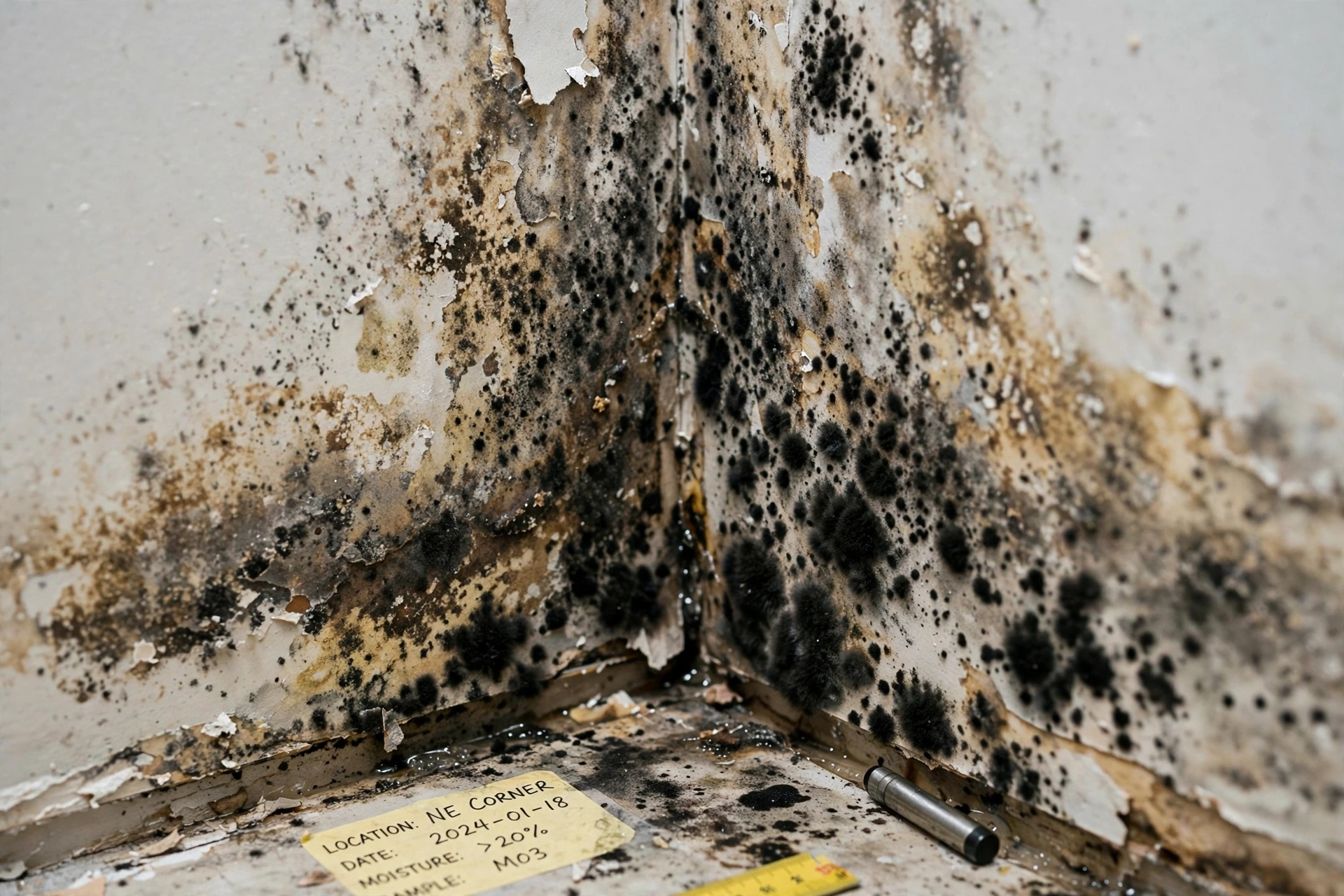
If you already see mold, do not brush it or run fans over it, because that can spread spores into the air. Do not paint over it either, because it will grow back through the paint. If mold is found after a leak, see mold remediation in Morristown, which covers containment, cleaning, and drying after water damage. Keep indoor humidity between 30 and 50 percent when you can, and check the wall base and cabinet toe kick for a musty smell in the days after a leak, even if the floor looks dry.
Will homeowners insurance cover an appliance leak?
A standard homeowners policy may cover sudden and accidental water damage, such as a burst washing machine hose. It often does not cover a slow leak that went unnoticed for weeks, or damage from wear and lack of maintenance. Flood damage usually needs separate flood insurance.
Call your insurer promptly and ask what documentation it needs before damaged materials are thrown away. Take photos, keep receipts, and keep the failed hose or fitting if you can. If your basement flooded too, see our guide on who to call when your basement floods in Morristown.
How to prevent the next appliance leak in Morristown
Prevention is cheaper than cleanup, and most of it takes minutes. Check washing machine hoses once a year and replace rubber hoses every five years with braided stainless steel. Check the dishwasher supply line under the sink for drips, and look at the door seal for cracks. Pull the fridge out once a year and check the ice maker line for moisture at the wall base.
In older Morristown homes, ask a plumber to check aging supply lines and shutoff valves during a routine visit, because a valve that has not moved in years may not close when you need it. Keep a water alarm, a small battery sensor that sounds when it touches water, behind the washing machine, under the kitchen sink, and near the water heater. They cost little and they catch the slow leaks that cause the most damage.
Morristown appliance leak FAQs
How long does it take for mold to grow after an appliance leak?
Mold can begin growing on wet materials within 24 to 48 hours, according to EPA guidance. Visible colonies often take 3 to 7 days to appear. That is why drying should start the same day, even if the puddle looks small.
Can I clean up an appliance leak myself?
You can mop up a small, fresh spill on a hard floor if the water never touched drywall, carpet pad, or a wall cavity. Call a professional if water sat for more than a few hours, soaked cabinets or flooring, or dripped to the floor below.
How much does appliance leak cleanup cost in Morristown?
Typical ranges from research put a small, quickly caught leak under $500 to $1,500, and a fridge or dishwasher leak that reached the subfloor at about $1,500 to $6,000. The final cost depends on area, water type, and materials.
Does homeowners insurance cover a leaking dishwasher?
A sudden dishwasher failure is often covered, but a slow leak that went unnoticed for weeks may not be. Check your policy, take photos before cleanup, and ask your insurer what it needs.
Why does my washing machine keep leaking in Morristown?
The most common causes are a worn supply hose, a loose fill connection, a door seal that has cracked, or a drain that backs up. In older Morristown homes, aging lines and valves fail more often, so check hoses once a year.
How long does it take to dry a room after an appliance leak?
Most rooms dry in 2 to 4 days with air movers and dehumidifiers, and longer for finished rooms, thick walls, or water that sat for days. Drying ends when moisture readings are back to normal, not when the floor looks dry.
Should I replace my washing machine hoses, and how often?
Yes. Replace rubber hoses every five years with braided stainless steel lines, and check them once a year for bulges, cracks, or rust at the fittings. A burst hose can release a large volume of water in minutes.
Appliance leak in Morristown? Call now
If water is on your floor now, do not wait for it to dry on its own. It will not, and the damage grows every hour it sits. Call (973) 240-9515 any time for appliance leak cleanup in Morristown. We answer emergency calls 24/7 and aim to reach emergency calls in Morristown within 30 minutes.